
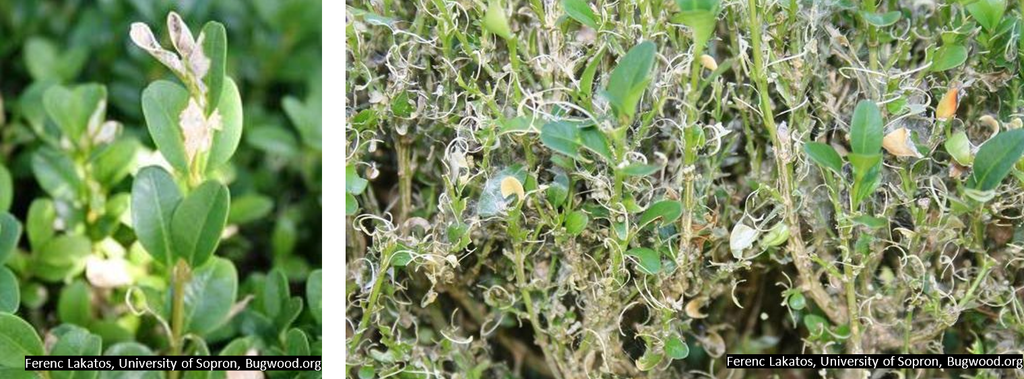
The first sign of an infestation is defoliation from caterpillar feeding. Caterpillars remove all leaf tissue except the midvein. If defoliation is observed, check canopy for BTM caterpillars.
Options for Control
For small infestations:
- Hand-pick larvae from plants
- Apply Horticultural oil, Insecticidal soaps, Spinosad & Bacillus thuringiensis kurstaki (Btk) to control young larvae. Note: several applications may be needed throughout the season to target larvae of multiple, overlapping generations.
For heavy infestations:
- Avoid making preventative applications with broad-spectrum insecticides when BTM is not present.
- Insecticide effectiveness against eggs, pupae, and older caterpillars may be low since they tend to be on the undersides of leaves and hidden deep in a canopy of leaves and webbing.
- To prevent resistance issues, rotate pesticide mode of action.
- Select products that are least harmful to pollinators and other insects.
For proper disposal: french drain quote
- Clean up leaf litter and debris to remove potential overwintering sites.
- Double-bag in plastic and place in municipal waste.
Landscape Alternatives
Few shrubs offer the compact size, evergreen foliage, and resistance to deer browsing that boxwood offers. However, with the amount of pest and disease pressure these shrubs are now facing, homeowners may opt for plants that will require less maintenance. Consider the following shrubs when replacing boxwoods:
- Japanese Holly (Ilex crenata)
- Inkberry Holly (Ilex glabra)
- Junipers (Juniperus spp.)
- Yew (Taxus spp.)
- Arborvitae (Thuja spp.)
To schedule a free onsite consultation, click the link to get started. Contact – mjgolden.net
This is a PDF FILE